
How service providers create content without compromising billability
- Author
- Effy Shkuri
- Published on:
- Published in:
- Content Marketing

Create Content 10 Times More Effectively
In theory, content creation is the most sustainable path to success for IT service providers. In practice, however, it’s a challenge.
The average IT consulting firm in the Netherlands has 20–100 employees and barely has time to create valuable content. Implementing a content strategy to generate demand often has a direct and negative impact on the firm’s billability. It’s also important to note that prospects aren’t looking for content, but for valuable answers.
1 – Answers to the unspoken questions
In a competitive market, sharing domain expertise is crucial to standing out from the crowd. With Point of View (POV) content, you can share your unique insights to strengthen your authority in the industry.
2 – Answers to the specific questions
These are the answers to questions frequently asked by prospects and customers. The answers can often be found in the organization’s internal knowledge base, in email correspondence with customers, and in the many conversations that take place every day. These are the questions customers ask when they are aware of a problem.
How is the team responding now?
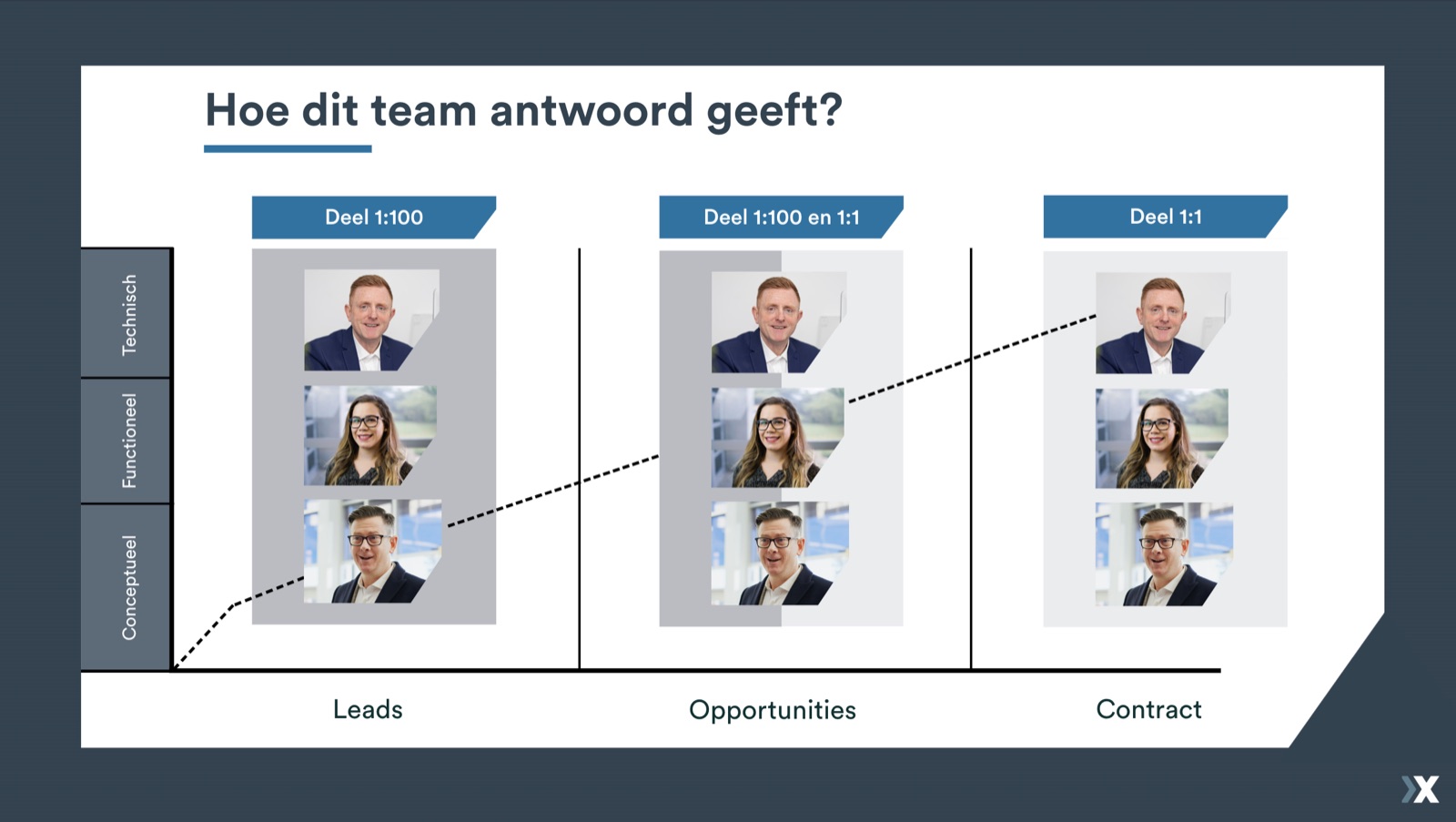
Currently, answering key questions from prospects often goes hand in hand with the level of their commitment. When a prospect shows greater commitment, the answers provided are more detailed. However, every time an answer is given, it’s in a one-on-one setting. It’s a traditional approach in which the setting changes, but the answers remain largely the same.
Why is this a problem?
Currently, the artisanal approach is often applied too early in the process, which leads to unnecessarily high costs. In addition, the idea that prospects have content needs in a sequential order is outdated. Multiple stakeholders consume content at any given time and influence the potential purchasing process.
Creating Scalable Content
The status quo of 1:1 content creation must be broken to achieve results that are 10 times more effective. For example, Google is no longer the most influential content platform it has been for years. Moreover, search is only relevant when prospects know what they want. LinkedIn has taken a prominent position in B2B. The major advantage is that this has led to a democratization of content distribution, because quality is more important than advertising power. The IT service provider has the knowledge, but is now challenged to share this knowledge not exclusively through one-on-one conversations, but primarily at scale via social selling.
1 – Record the conversation digitally
Every conversation is unique, but the content shared is largely the same. After all, this is the only way for a consulting firm to operate profitably. The pitch deck, the advice, and the demo are all examples where the content is often identical regardless of the prospect or client. The goal, therefore, is to capture the most important topics digitally in the form of a video recording.
2 – Scale 1:100
Distribution is much easier once the video has been recorded. That’s because video can easily be repurposed into white papers, blog posts, or LinkedIn content. It’s more a matter of repurposing than creating new content. You can outsource the packaging, but creating unique content is the domain of the IT service provider.
3 – Involve all subject matter experts
The best content is created by the many experts who have valuable networks. Salespeople, for example, encounter many obstacles and questions, and this provides excellent input for creating content. In addition, consultants interact with clients on a daily basis and receive the most detailed questions, which they answer on a one-on-one basis every time.
Conclusion
In today’s rapidly evolving digital world, IT service providers are forced to rethink their approach to content creation. While the benefits of content marketing are clear, many IT consulting firms struggle with its actual implementation.
Time constraints and pressure to meet billability targets often prevent the implementation of an effective content strategy. Nevertheless, it is crucial to recognize that in today’s B2B landscape, content is not merely “content.” It consists of valuable answers to both latent and explicit questions from prospects.
The traditional, artisanal 1:1 approach to content sharing is both costly and inefficient. With the rise of platforms such as LinkedIn and the shift by search engines toward more democratic content distribution, IT service providers now have the opportunity to share their in-depth knowledge at scale and thus reach a much larger audience.
The key to making content creation 10 times more effective lies in digitizing conversations, repurposing this content in various formats, and involving all subject matter experts in the process. By leveraging the in-house expertise within the organization and combining it with modern content distribution methods, IT service providers can expand their reach, strengthen their authority in the industry, and build more valuable relationships with their prospects and customers.
Effy Shkuri
"Our people make the difference." Really? As a former "digital workplace & IT entrepreneur," I've said this for years about my 25 colleagues. But the reality is we were only considered thought leaders by 5% of our target audience. Even today, this remains a common statement from MSPs and IT service providers. But these words lose their meaning if your expertise does not extend beyond your existing customers and a handful of prospects. I now help IT entrepreneurs with thought leadership in their niche.